CLIMB THE RANKS – A memorable Battlefield 3 match can turn on a surprisingly small decision. An Assault player revives a teammate near an objective. An Engineer keeps a damaged vehicle running. A squad changes direction before an undefended position falls. Each action gives the team another opportunity to move forward.
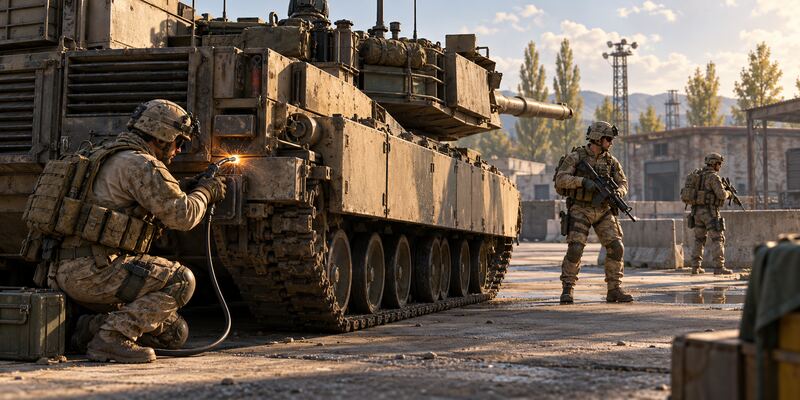
Developed by DICE and released in 2011, Battlefield 3 brings infantry, tanks, helicopters, and jets into battles built around four complementary classes. That combination gives its multiplayer a distinctive rhythm: individual fights happen inside a larger struggle for control.
Understanding that larger struggle makes the game more rewarding. Accurate shooting matters, but so does recognizing where help is needed, choosing appropriate equipment, and staying useful when a straightforward attack stops working.
Understand the Objective Before Choosing Your Next Move
Conquest and Rush ask players to approach the battlefield differently. In Conquest, teams capture and hold flags while trying to exhaust the opposing team’s tickets. Holding a majority of the flags causes the enemy ticket count to drain, giving territorial control a direct influence on the result.
This makes defending an existing position a meaningful decision. Constantly moving toward the next capture marker can leave a team stretched across the map. Before advancing, consider whether your squad would contribute more by protecting a vulnerable flag or reinforcing a teammate’s attack.
Rush creates a more concentrated struggle. Attackers must arm and destroy pairs of M-COM stations to open the next section of the map. Defenders protect those stations and disarm them when necessary. Battlefield 3 requires attackers to arm the objectives; simply shooting the stations or hitting them with explosives does not destroy them.
Once an M-COM is armed, priorities change. Chasing a distant opponent may accomplish less than helping prevent a disarm. Reading that shift is a useful habit: keep asking what action would move your team closer to the actual win condition.
Choose a Class That Addresses the Team’s Needs
Battlefield 3’s classes give players different ways to contribute. Learning their responsibilities helps you choose equipment with a clear purpose.
Assault combines frontline combat with medical support. Its equipment options include medkits and defibrillators, allowing appropriately equipped players to heal and revive teammates. A thoughtful revive can restore a squad’s ability to contest an objective. Check the situation first, however: bringing someone back into the same exposed position can lead to another immediate death.
Engineer specializes in vehicle interaction, with equipment for repairing friendly vehicles and threatening enemy armor. This makes the class especially useful when vehicles are shaping the round. Before deploying, check your selected gadgets. A class name alone does not guarantee that you are carrying the tool your team currently needs.
Support provides ammunition and brings access to light machine guns. Battlefield 3 also introduced a suppression system, giving incoming fire effects beyond direct damage. Keep ammunition accessible to teammates who are actively fighting. A supply box placed where allies can safely reach it is more useful than one left behind as the squad moves elsewhere.
Recon combines long-range capabilities with spotting and equipment intended to support the team. DICE explicitly designed the class to contribute beyond its sniper role. Judge a position by the useful information and assistance it provides. A distant perch may offer an impressive view while leaving you poorly placed to influence the contested objective.
The practical lesson is flexibility. If your squad already has several players performing the same job, filling a missing role can make everyone more effective.
Make Vehicles Part of the Team’s Plan
Battlefield 3’s vehicle selection includes ground transport, armor, helicopters, and jets. Their presence lets battles develop across different distances and elevations, giving infantry encounters a wider context.
A useful way to approach a vehicle is to decide what you intend to accomplish with it. Transport can help teammates reach an objective. Armor can support a contested advance. A vehicle that remains close enough for friendly assistance may contribute longer than one driven deep into an enemy-controlled area.
Communication makes these relationships easier to maintain. A short request for repairs or a clear destination gives teammates something specific to respond to. Even a small amount of coordination can prevent players from working at cross-purposes.
For someone learning a vehicle, survival and control are sensible early goals. Become comfortable with movement, positioning, and disengaging before expecting consistently spectacular results.
Pay Attention When the Environment Changes
Battlefield 3 uses the Frostbite 2 engine and features environmental destruction, including walls that can break apart during combat. These changes contribute to the game’s atmosphere while affecting how exposed a position becomes.
The practical consequence is that a familiar location deserves another look after heavy fighting. Cover that previously protected an approach may be damaged. A room that felt sheltered can become easier to observe from outside.
Avoid assuming that a position remains useful simply because it worked earlier in the round. Reassess the surrounding space, the direction of the fighting, and your route back toward teammates.
This is one of the game’s most engaging demands: map knowledge helps, but attention to the current situation gives that knowledge value.
Build Better Habits Between the Spectacular Moments
Battlefield 3 can feel overwhelming when several threats compete for your attention. Improvement becomes more manageable when you focus on one repeatable habit at a time.
Start with movement. Before leaving cover, decide where you are going and why. Moving toward a specific objective or teammate gives you a clearer purpose than sprinting toward the loudest firefight.
Then examine your equipment choices. If the same problem repeatedly stops your squad, consider whether a different gadget or class would help. Treat the deployment screen as an opportunity to respond to the match.
Communication is another useful focus. Brief, relevant information is easier to act on than a running account of everything happening nearby. State the location, the problem, and the assistance needed.
After a difficult round, identify one decision you could improve. Perhaps you abandoned a flag too quickly, stayed in an ineffective position, or forgot to use your class equipment. A specific adjustment gives the next session a practical goal.
Kills remain part of the picture, but evaluate the opportunities your actions created as well. Helping teammates stay supplied, maintaining a useful position, and supporting an objective can explain your contribution more clearly than a single statistic.
Know Which Version You Are Reading About
Platform availability matters when revisiting Battlefield 3. Online services for the PlayStation 3 and Xbox 360 versions ended on November 7, 2024. EA stated that owners could continue playing the single-player component. The PC version was explicitly excluded from that closure announcement.
The multiplayer design discussed here shows how much a shooter can gain from giving players complementary responsibilities. A well-timed revive, a repaired vehicle, or a carefully defended objective allows one player’s decision to support someone else’s effort. Those connections give Battlefield 3’s largest battles a human scale—and make a coordinated push especially satisfying.




 SILENT HILL: DOWNPOUR
